

The South, under Democratic control during the Confederacy, built its economic foundation on one thing: slavery. The plantation economy thrived because it exploited human beings, forcing them into grueling labor without compensation. Slavery wasn’t just a moral stain; it was a deliberate economic strategy. Southern Democrats argued vehemently that abolishing slavery would devastate the economy, destroy their way of life, and make survival impossible.
Fast forward to today, and we see a strikingly similar playbook being used by modern Democrats. While the days of plantation slavery are long gone, the exploitation of cheap labor continues. This time, it’s illegal immigrants who are the backbone of their new economic scheme. The justification? “Illegal immigrants are essential because they do the jobs Americans won’t do.” Translation: they work for far less than what American workers expect, under conditions most Americans wouldn’t tolerate, ensuring cheap labor for industries that benefit from lax enforcement of immigration and labor laws. Sound familiar?
The Economic Arguments: Then and Now
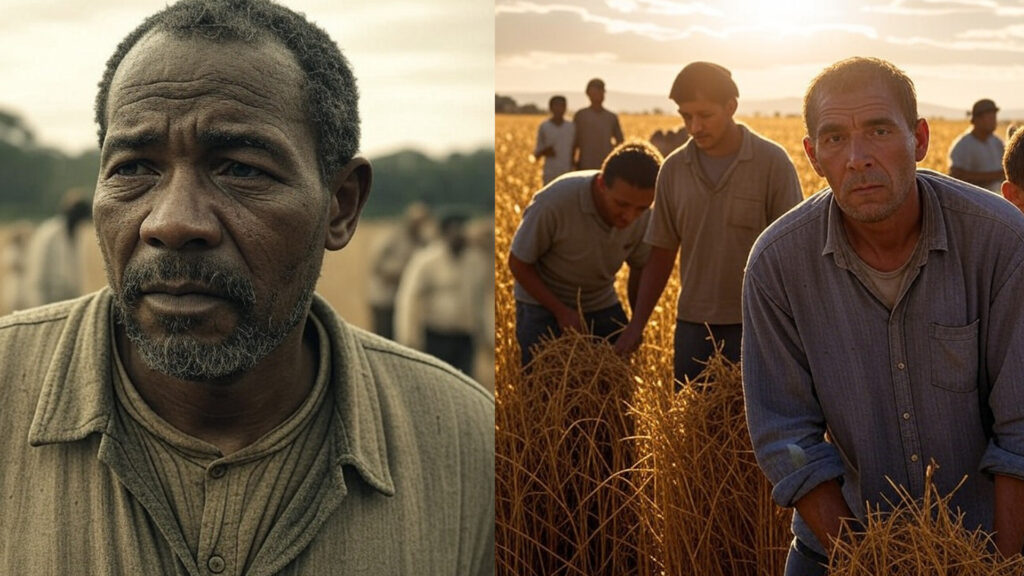
During the Confederacy, Southern Democrats argued that ending slavery would collapse their economy. Cotton and other cash crops, which made up a significant portion of U.S. exports, depended entirely on forced labor. Their position wasn’t just about greed—it was about maintaining their economic dominance, even if it meant perpetuating the inhumane practice of slavery. To them, the financial pain of abolition was too high a price to pay, regardless of the moral imperative.
Today, modern Democrats make eerily similar arguments about illegal immigration. According to Pew Research, over 7 million illegal immigrants are part of the U.S. workforce, filling roles in agriculture, construction, and service industries. Critics argue that enforcing labor laws and deporting illegal immigrants would cause an economic hit. They insist that without this workforce, costs would rise, businesses would shutter, and economic chaos would ensue. Once again, the argument prioritizes economic convenience over ethical responsibility.
But just like during the days of slavery, these arguments ignore the bigger picture. The Confederacy’s economy was deeply flawed because it relied on an unsustainable, immoral system. When slavery ended, there was economic turmoil, but the South eventually rebuilt on stronger, fairer foundations. The same holds true today: while enforcing immigration laws might bring short-term economic challenges, it’s the necessary price of correcting a broken system.
The Hidden Costs of Illegal Immigration
Let’s talk numbers. Illegal immigration is not the economic boon many Democrats claim it to be. According to the Federation for American Immigration Reform (FAIR), illegal immigration costs U.S. taxpayers over $150 billion annually in public services, including healthcare, education, and law enforcement. Meanwhile, illegal immigrants contribute far less in taxes, leaving the burden on American citizens.
At the same time, wages are suppressed for working-class Americans, particularly in industries flooded with illegal labor. The Economic Policy Institute found that employers exploit this cheap labor to undercut fair wages and benefits for legal workers. It’s a lose-lose situation: American workers are hurt, and illegal immigrants are exploited, all so that industries can maximize profits.
And let’s not forget the strain on social systems. Public schools in areas heavily populated with illegal immigrants, are often underfunded and overcrowded, while hospitals struggle to provide unpaid care. These are real costs borne by taxpayers, all while Democrats insist this exploitation is somehow necessary.

The Moral Imperative
The parallels to the Confederacy couldn’t be clearer. Back then, the Democrats clung to slavery as an economic crutch, ignoring the moral devastation it caused. Today, they cling to illegal immigration for the same reason. But here’s the truth: the right thing to do is rarely the easiest or the cheapest option. Abolishing slavery wasn’t easy, and the South paid a steep price for their reliance on such a heinous system. But it was the right thing to do, and ultimately, the nation emerged stronger and more united.
The same applies now. Fixing the illegal immigration problem—through stronger border enforcement, penalties for businesses that exploit illegal labor, and policies that prioritize legal immigration—will be painful. Some industries might see higher costs. Certain regions might experience economic adjustments. But in the long run, the United States will be better for it. We will have a labor system that rewards hard work fairly, an immigration system that respects the rule of law, and an economy that doesn’t rely on the exploitation of vulnerable people.
The Right Thing Isn’t Always Easy, But It’s Always Right
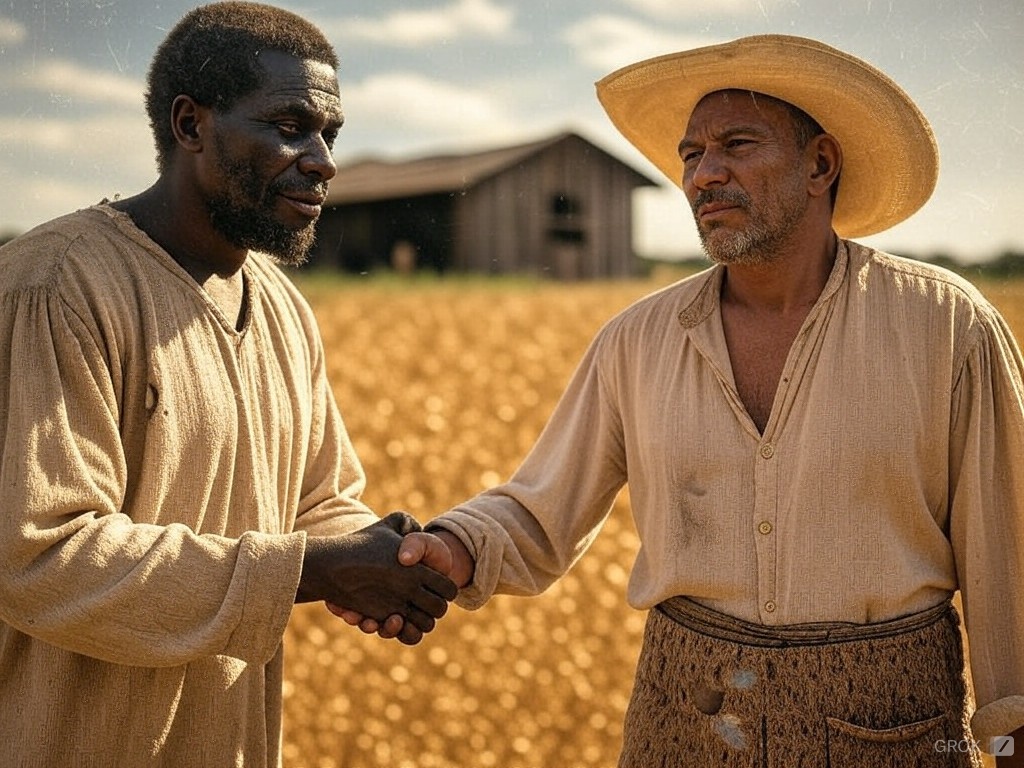
The Democratic Party’s history of supporting the exploitation of labor—from the plantations of the Confederacy to today’s illegal workforce—is a lesson in moral and economic short-sightedness. History shows us that while correcting bad practices comes at a cost, the alternative is far worse. Continuing to rely on a system that exploits illegal labor not only harms American workers but also undermines our moral standing as a nation.
It’s time to break free from this modern-day Confederacy. Yes, the road to reform will be challenging, but it’s a challenge worth taking. By addressing illegal immigration head-on, we can create a fairer, stronger economy and reaffirm our commitment to doing what is right—no matter the cost. History has proven that America is at its best when it rises to meet such challenges. Let’s not fail this test.
Oh great, another comparison that makes zero sense! I can’t wait for the sequel where they compare fast food workers to gladiators. Because obviously, struggling to get by is just like fighting lions in an arena. Pure genius!
The author brings up some valid concerns about the economy and immigration. It’s a tough situation that many people are talking about nowadays.
This article raises questions worth considering, especially regarding economic impacts. I hope more discussions happen around this topic.
I read this and found it thought-provoking. The comparisons are strong, but I’m not sure I agree with everything. It’s a complex topic for sure.
I really liked this article! It made me think about how important it is to treat everyone fairly. We can do better and make a stronger country together!
This article makes some interesting points. It’s good to think about history and how it connects to today. I wonder what others think about these ideas.
Wow, this article really went on a history trip! I thought I was just reading about politics, not getting a lesson on the past. Can we get a time machine instead of all this talk about labor? Just imagine, ‘Back to the Future: The Economic Edition!’
Reading this made my brain feel like it was doing gymnastics! Who knew politics could be so complicated? I think I’ll stick to my day job of counting how many snacks I can eat while pondering life’s big questions—like why do we even have to pay for avocado toast?
Interesting perspective on immigration and labor issues. Makes you think about the past and how it relates to our current challenges.
Wow, this article is really groundbreaking! I had no idea that people working jobs nobody wants to do were just like slaves. Who knew? Next thing you know, they’ll be saying my cat’s litter box is a form of forced labor. Brilliant logic!