
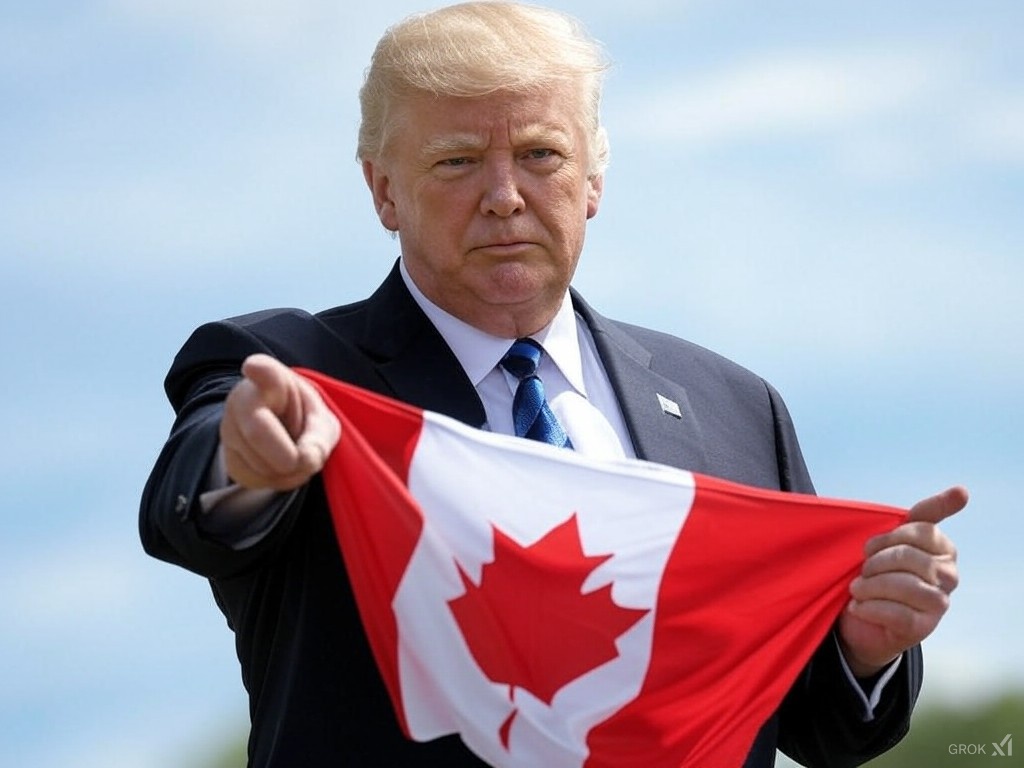
So here we go again. President Trump has just thrown down a 25% tariff on Canadian and Mexican imports and a 10% tariff on China, citing national security concerns—specifically, the flood of illegal drugs, fentanyl, and the open border crisis. Canada and Mexico are already hitting back with their own retaliatory tariffs, and China is taking it to the WTO.
Why Is This Happening?
Most of the mainstream media will give you a surface-level take: “Trump bad, tariffs raise prices.” But let’s dig into the why—because, like it or not, there’s logic behind this move.
First, fentanyl is killing Americans at an absolutely horrifying rate. More Americans are dying each year from fentanyl overdoses than were lost in the entire Vietnam War. We know China is funneling precursor chemicals to Mexican cartels, who then manufacture and smuggle the poison into the U.S. But here’s the part many miss—Canada is now in the mix, with growing numbers of fentanyl operations inside Canada with some using their northern border to get drugs into the U.S.
Second, the economic leverage. The U.S. market is the prize. Canada, Mexico, and China all rely on American consumers to keep their economies afloat. Trade accounts for 67% of Canada’s GDP, 73% of Mexico’s GDP, and only 24% of America’s GDP. That means we have the upper hand when it comes to leverage. If these countries want continued access to our markets, they need to start pulling their weight in stopping the flow of drugs and illegal immigration.

Canada’s Role in Fentanyl Trafficking: What Their Border Officials Say
Canadian border officials have repeatedly stated that Canada is not a significant source of fentanyl entering the United States. Most of the illicit fentanyl found in the U.S. is traced back to Mexican cartels, which produce the drug using precursor chemicals from China and smuggle it across the southern border. While Canadian authorities have discovered domestic fentanyl production, including a major drug lab bust in 2024, these cases remain relatively small in scale compared to the operations in Mexico.
That said, some experts warn that Canada’s role in the fentanyl trade could be evolving. With increasing domestic production and reports of smuggling attempts across the northern border, the possibility of Canada becoming a larger player in the trafficking network cannot be entirely dismissed. However, as of now, Canadian officials maintain that the northern border is not a primary entry point for fentanyl into America.
The Potential Outcomes—The Good and the Ugly
The Good:
- More American Independence – If enough companies bring manufacturing back home, the U.S. will be less reliant on foreign supply chains. More factories, more jobs, and less economic dependence on hostile or unreliable trade partners.
- Lower Demand for Imports – If American companies start sourcing more locally, that means less need for foreign goods. Ironically, this could actually lower import prices over time due to reduced demand.
- Holding Other Countries Accountable – Canada and Mexico can’t just sit back and play neutral while deadly drugs run wild. If this forces them to take real action, it’s a win.
The Ugly:
- Retaliation Hurts Certain Sectors – Canada’s $155 billion in retaliatory tariffs will hit American industries that depend on exporting to Canada. Small businesses that rely on cross-border trade could take a big hit.
- Short-Term Price Increases – Yes, tariffs mean higher prices in the short term. That’s the part everyone screams about, but let’s be honest—it’s not the end of the world. Supply chains adjust, and new domestic industries can emerge.
- Diplomatic Fallout – Canada and Mexico aren’t happy, and China is challenging this at the WTO. International trade relations could get rocky.

The Logical Piranha Take
Look, we get it—Trump is playing hardball, and while we support the goal of stopping fentanyl and illegal immigration, we’re not exactly thrilled about nuking our closest trade partners in the process. There are more diplomatic ways to tackle this problem. Stronger border security, direct bilateral agreements, and intelligence-sharing could go a long way.
But let’s also cut through the media hysteria. The doom-and-gloomers want you to believe this is economic Armageddon. It’s not. Yes, some prices will go up. But the U.S. economy is massive, and if this results in more American production and less reliance on foreign goods, that’s a long-term win. Plus, if Canada and Mexico actually crack down on cartels, this whole thing could de-escalate.
So, is this the best execution? No. Could it work? Possibly. Will the media lose their minds? Absolutely.
Bottom line: This isn’t the end of the world, and it might even have some benefits—if handled correctly. But for now, buckle up, because this trade war is just getting started.
This article is just another attempt to justify Trump’s reckless actions. Tariffs are going to hurt everyday people, not solve any real problems. Why are we punishing our neighbors instead of finding real solutions? It’s frustrating to see this kind of thinking.
I think it’s great that we’re trying to stop fentanyl from coming in! We need to protect our country and keep our families safe. More American jobs sound good too!
So let me get this straight: Trump is throwing tariffs like confetti at a wedding? Next, he’ll be charging us for the air we breathe! At this rate, I’m expecting a ‘breath tax’ in the next budget!
I don’t get why people are acting like tariffs are the end of the world. Sure, prices might go up a bit, but isn’t it worth it if it helps stop drugs coming into our country? If Canada is involved in fentanyl production, they need to step up! We can’t just ignore that. Plus, making stuff here could create jobs. It seems logical to hold these countries accountable instead of just letting them do nothing while we deal with the fallout.
I really like how this post explains the reasons behind the tariffs. It makes sense to hold other countries accountable. Hopefully, this will lead to a safer future for everyone!
I guess this is just how things go sometimes. Tariffs can be good or bad, depending on how they are used. I hope it works out in the end.